

Glass Bridge Navigation
A modern bridge experience, engineered for reliability
A glass bridge is the operational heart of a modern yacht. It must be fast, stable, and predictable with clear visuals, clean switching, and a layout that supports safe navigation and crew workflow. When integration is done poorly, issues show up as blank screens, unreliable source switching, latency, or systems that are difficult to troubleshoot under pressure.
We deliver Glass Bridge Navigation solutions focused on robust integration, tidy engineering, and long-term serviceability designed to perform at sea and remain supportable worldwide.
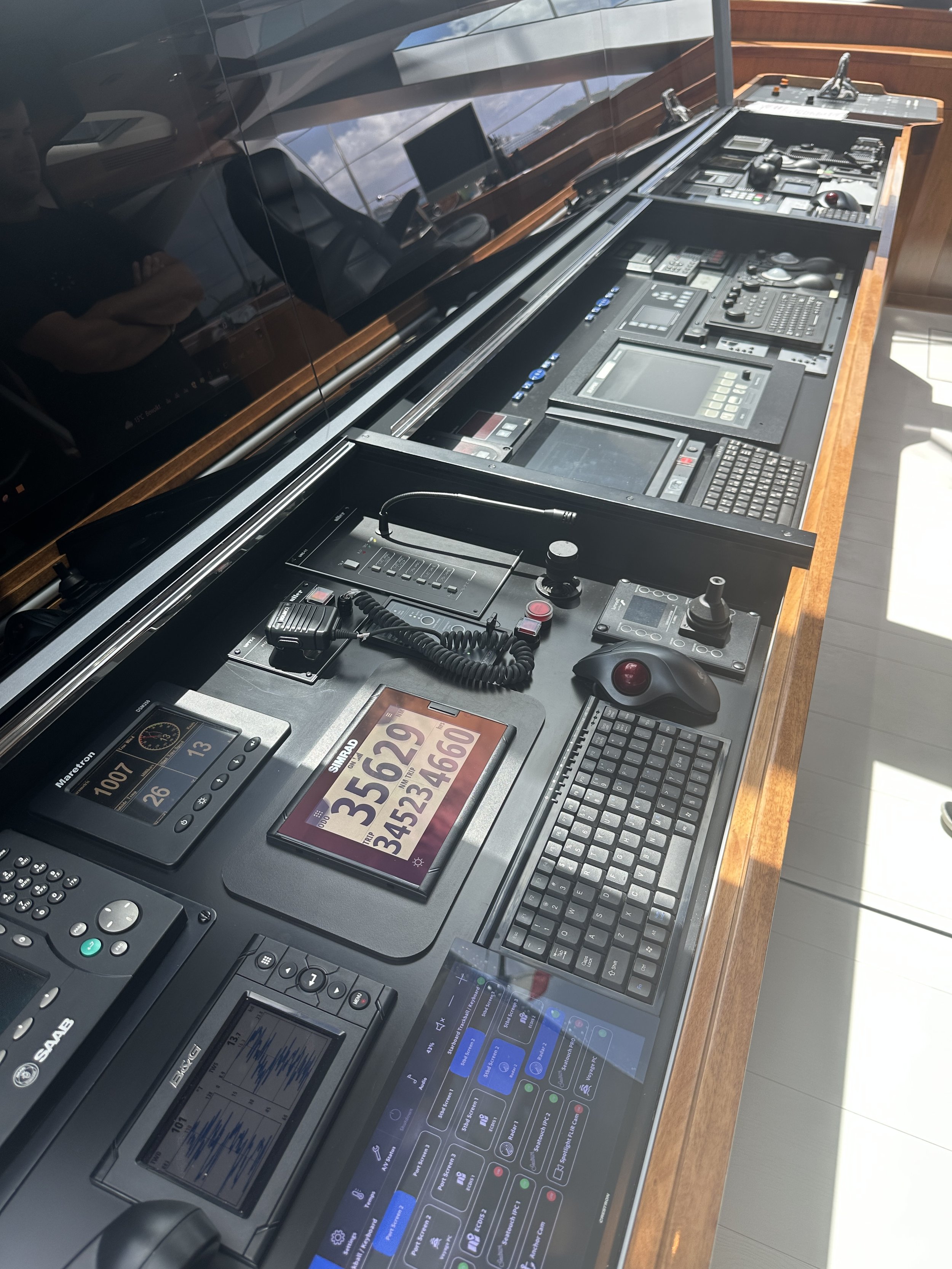

What Glass Bridge Navigation integration includes
Glass bridge projects typically involve more than “screens on a bridge.” The outcome relies on proper architecture across AV, IT, power protection, and redundancy.
Depending on vessel scope, our work can include:
Bridge display integration
Bridge display layouts and mounting coordination
Source routing and signal distribution strategy
Control intergration
Switching design to support operational workflows
Display calibration and consistent visual performance
Video distribution and signal management
Reliable routing between navigation sources and displays
Signal conversion where required for compatibility
Latency awareness and performance validation
Clean labelling and documentation for fault isolation
Network and infrastructure readiness
Structured cabling strategy and equipment location planning
Segmentation considerations for operational systems
Monitoring and support readiness pathways (policy dependent)
Redundancy and operational resilience
Architectural planning to reduce single points of failure
Practical failover workflows for bridge operation
Power protection and controlled recovery behaviour
Commissioning and documentation
End-to-end testing, validation, and sign-off support
As built documentation to support the crew and future service
Designed for real bridge operation
We focus on making the bridge practical and predictable:
Clear, repeatable switching workflows for crew
Consistent naming and labelling across displays and sources
Serviceable layouts with logical access for troubleshooting
System behaviour designed for power events and device recovery
This is critical on vessels with rotating crew and high operational standards.
Built for marine realities
Glass bridge systems must operate in challenging conditions and tight technical spaces. We account for:
Vibration and movement
Heat management in bridge consoles and nearby technical spaces
Cable routing constraints and service access
Power stability and protection
EMI considerations and robust signal integrity
What we deliver
Depending on scope, Glass Bridge Navigation services can include:
Bridge AV and infrastructure design support
Display and source integration planning
Video & control distribution and switching configuration
Commissioning, testing, and operational validation
Documentation and as built records
Ongoing support planning aligned with vessel policy
Our process
Discovery and bridge review
We align on operational requirements, bridge workflow, and existing navigation environment.
Architecture and integration design
We plan display layouts, routing, switching, and resilience.
Coordination with shipyard and bridge teams
Mounting, access, cabling pathways, heat, and power planning.
Commissioning and validation
Testing under real usage scenarios, performance tuning, and sign off support.
Handover and support readiness
Documentation, crew guidance, and long term service options.
FAQ
What does “glass bridge” mean on a yacht?
A glass bridge refers to a modern bridge setup where digital displays present navigation, vessel data, and operational information, replacing many traditional standalone instruments and gauges with integrated screen-based systems.
Can you integrate multiple navigation sources across multiple displays?
Yes. A key part of glass bridge integration is ensuring sources can be routed and switched reliably across the required displays, with a clear workflow that supports safe operation.
How do you reduce the risk of screens going blank or losing sources?
We focus on robust architecture, quality signal management, controlled power and recovery behaviour, and practical redundancy planning. We also validate performance during commissioning under real operational scenarios.
Do you work with the yacht’s navigation manufacturer or ETO team?
Yes. Successful glass bridge projects require close coordination with bridge specialists, the ETO, and shipyard teams to align routing, mounting, power, and operational requirements.
Is latency a concern for glass bridge video integration?
It can be, depending on routing methods and conversion requirements. We design to minimise latency and validate end-to-end performance during commissioning.
Can you support refits as well as new builds?
Yes. We can integrate new displays, improve routing and switching, tidy legacy infrastructure, and upgrade serviceability with clean documentation during refit windows.
What information do you need to start?
Bridge drawings (if available), current equipment lists, desired display layouts, operational requirements, and any constraints around power, space, and vessel timelines. An onboard assessment often speeds up correct decisions.