

NMEA Integration
Turn vessel data into a usable onboard experience
Modern yachts generate a huge amount of valuable data, including navigation, heading, depth, speed, wind, alarms, tank levels, generator status, and more. The challenge is making that data reliable, usable, and safely integrated across the vessel without creating instability, conflicts, or troubleshooting nightmares.
Our NMEA Integration service connects vessel data to the right onboard systems and interfaces, so crew can access relevant information where it’s needed with clean architecture, correct interfacing, and commissioning that’s built for marine reliability.
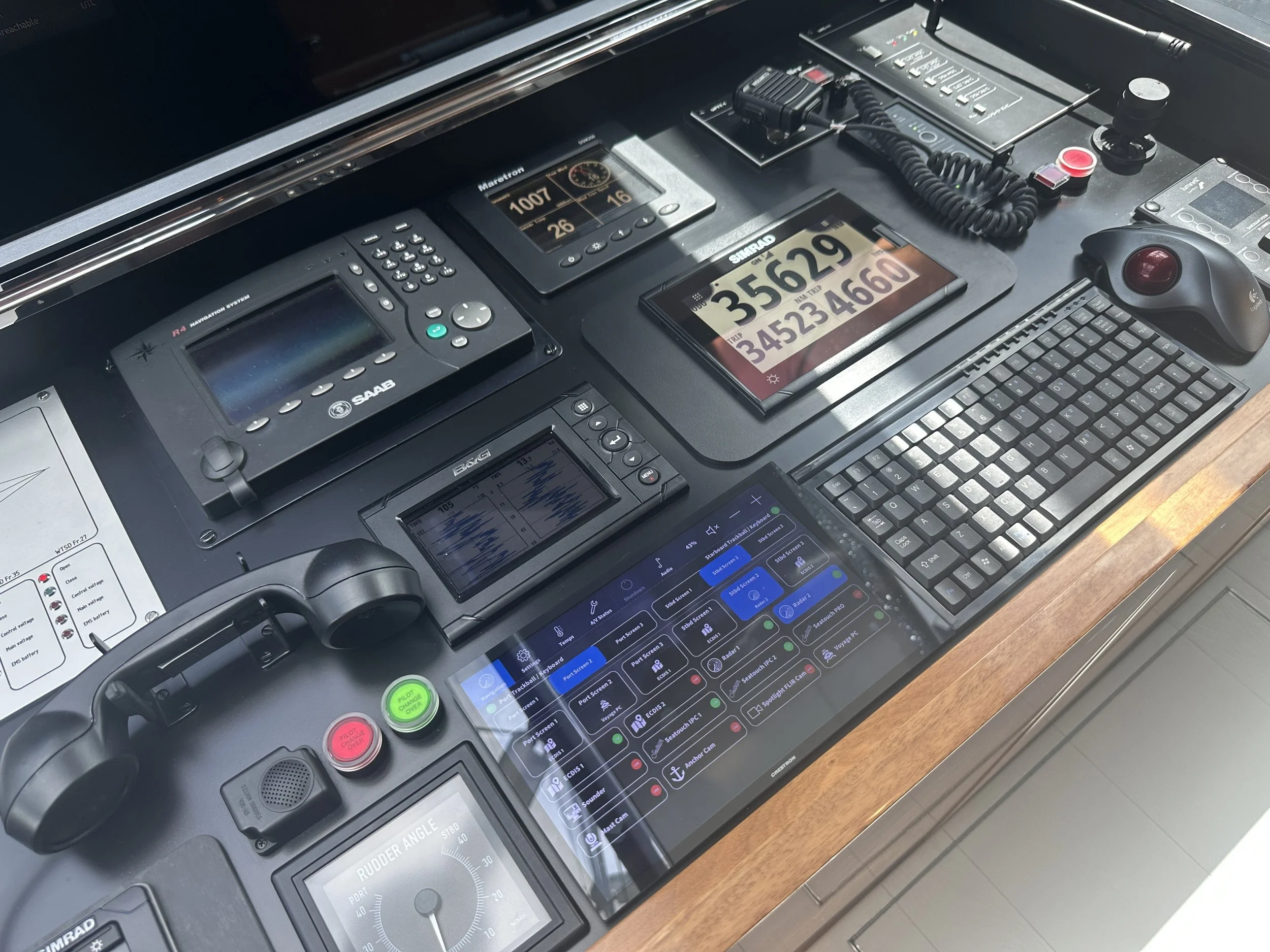
What NMEA integration includes
NMEA integration is about data distribution and system interfacing. Depending on vessel requirements, this can include:
Data acquisition and interfacing
Interfacing with NMEA networks and gateways
Identifying what data is available and what is required
Correct data translation and mapping where needed
Data distribution architecture
Planning stable data routes to displays and control systems
Avoiding conflicts, loops, and noisy data paths
Segmentation and protection of critical networks where required
Visualisation and system use
Presenting vessel data on bridge displays, touch panels, or approved interfaces
Aligning what is shown with crew workflows and operational use
Ensuring consistent naming and clear presentation
Integration with onboard systems
Linking vessel states to automation behaviour where appropriate
Examples could include night operation modes, safe lighting behaviours, or status-based alerts
Ensuring integrations are controlled, documented, and maintainable
Commissioning and validation
Testing data accuracy, refresh behaviour, and fail states
Confirming recovery behaviour for power events and device restarts
Documentation that supports future service and refit work
Designed for marine reliability and safety
Vessel data networks are operationally important. We design NMEA integration with a focus on:
Stable architecture that reduces single points of failure
Controlled access and protection for critical systems
Clear separation between guest, entertainment, and operational networks
Predictable behaviour under fault conditions
Documentation that allows fast troubleshooting worldwide
Why proper NMEA integration matters
Better situational awareness
The right data in the right place improves decision-making and efficiency.
Cleaner systems, fewer issues
A well-designed architecture reduces intermittent faults and conflicts that can plague poorly integrated vessels.
Easier support and servicing
Documented integration makes troubleshooting faster during charter and global operations.
Scalable for future upgrades
A clear data strategy allows new systems to be added without rebuilding the vessel’s integration approach.
What we deliver
Depending on scope, our NMEA integration service can include:
NMEA integration design and interfacing strategy
Gateway selection and configuration planning where required
Data routing and distribution architecture
Interface and visualisation planning aligned to crew workflows
Commissioning, testing, and validation
Documentation and as built records
Support readiness planning aligned to vessel policy
Our process
Discovery and data review
We confirm what data sources exist, what’s required, and where it needs to be displayed or used.
Architecture design
Interfacing approach, routing strategy, protection, and system boundaries.
Integration and configuration
Gateway setup, data mapping, and controlled distribution to target systems.
Commissioning and validation
Accuracy checks, refresh behaviour testing, and fault recovery validation.
Handover and documentation
Clear records and operational notes to support the vessel long term.
FAQ
What is NMEA and why is it used on yachts?
NMEA is a marine data communication standard used to share navigation and vessel information between systems, such as GPS, heading, depth, wind instruments, and other onboard equipment.
Can you show NMEA data on control system touch panels or displays?
Yes, where appropriate and approved by vessel stakeholders. We can integrate and present relevant vessel data in a clear, usable format aligned with crew workflows.
How do you avoid conflicts or instability when connecting multiple systems to NMEA data?
We design the data architecture carefully, use correct gateways and routing methods, and validate performance during commissioning to avoid loops, data collisions, or unreliable refresh behaviour.
Is NMEA integration the same as glass bridge navigation?
They are related but different. Glass Bridge focuses on the bridge display environment and video/signal integration. NMEA integration focuses on vessel data acquisition, distribution, and interfacing between systems.
Can you integrate NMEA data into automation behaviours?
In some cases, yes. Where it makes operational sense and is approved, vessel states can be used as triggers for defined behaviours. We keep these integrations controlled, documented, and serviceable.
Do you work with existing gateways and legacy systems?
Yes. We can assess existing infrastructure, improve reliability, and modernise the integration approach during refits while keeping disruption controlled.
What do you need to start an NMEA integration project?
A list of required data points, current system details, drawings where available, and clarity on where the data needs to be displayed or used. An onboard assessment is often the fastest path to a correct integration plan.